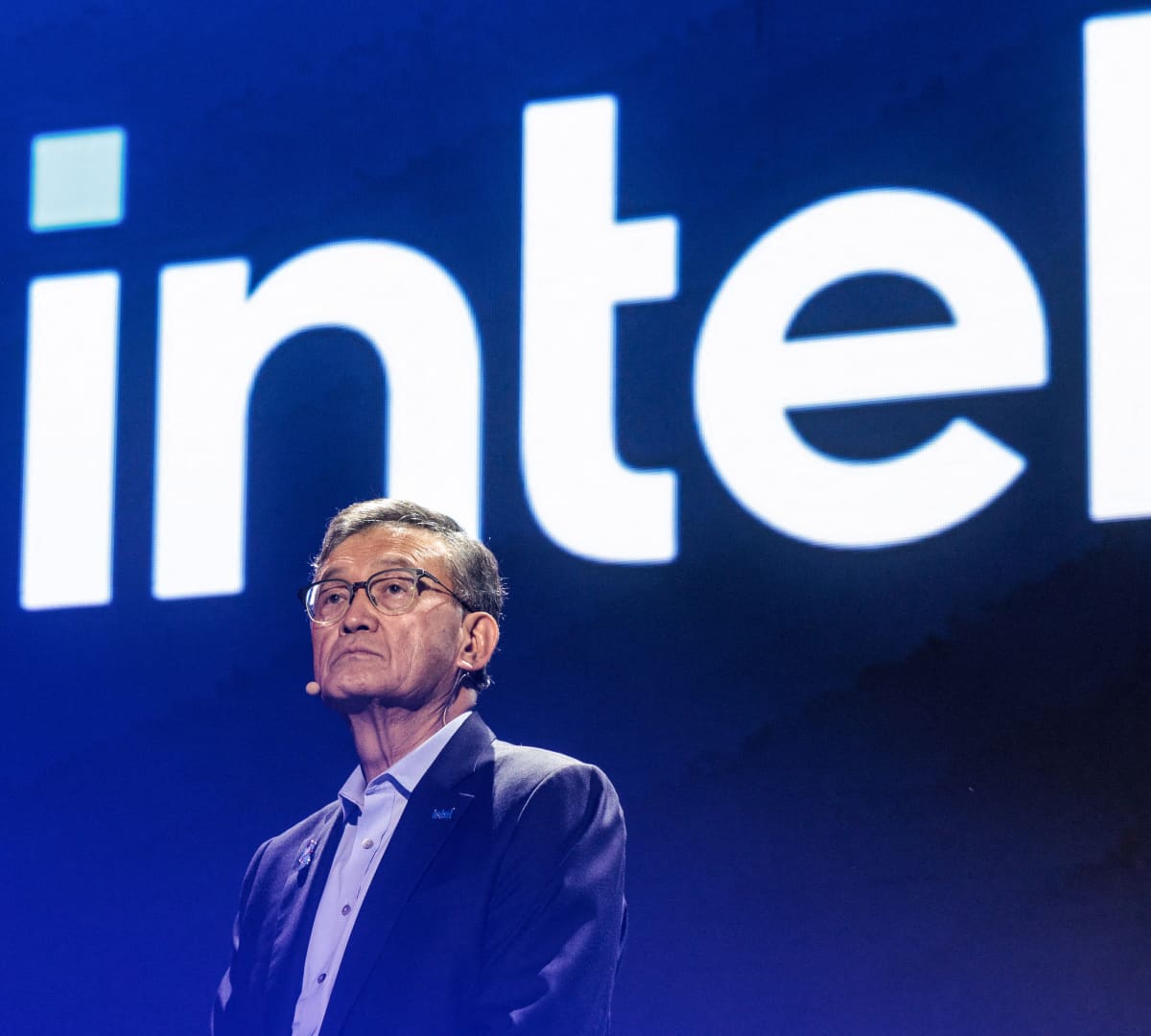
Intel shares fell sharply in extended trading after the chipmaker forecast fourth-quarter revenue of $15 billion to $16 billion, well below the $17.1 billion analysts had expected. Adjusted earnings per share of 25 cents also trailed the 43 cents LSEG reported analysts were projecting. The company blamed continued softness in the global PC market, and the numbers give that explanation real weight.
The third-quarter figures show where the strain sits. Total revenue climbed 21% from $13.7 billion a year earlier, but the client computing and physical AI group fell 5% to $8.1 billion and missed estimates. Counterpoint Research put global PC shipments down 4% in the second quarter, which it tied to soaring costs for memory and other components. Chief executive Lip-Bu Tan says demand for CPUs remains robust over the long term. Finance chief David Zinsner expects the PC slowdown to continue at least through the first half of next year. Both statements can be true, but they leave investors with a short-term hole to fill.
The bright spot is the data center and AI business, which rose 78% to $7.3 billion. That growth is the core of the bull case: agentic applications rely on CPUs to orchestrate tasks, and Intel is positioned to benefit. Yet a company cannot build its valuation on one segment while its largest traditional franchise shrinks. The stock's climb of about 150% this year suggests the market had already priced in a smooth transition. Intel is now asking shareholders to wait longer for it.
Management also has to answer for the foundry business, which analysts say has struggled to find its footing. The Arizona fab is in high-volume production of the 18A chip, and TechInsights analyst Dan Hutcheson noted that customers want a second source to keep Taiwan Semiconductor Manufacturing Co. honest on pricing. Intel's Ohio fab, originally expected to deliver chips in 2025, is still in construction. Tan's more cautious spending than his predecessor Pat Gelsinger may protect the balance sheet, but it also slows the path to the foundry customers Intel needs.
Intel should use this moment to be specific. It should show when the explosion at its Israeli fab, which cost about $600 million in lost revenue over two quarters according to Zinsner, will be fully behind it. It should name the milestones on 14A and disclose how far its foundry customers have progressed. Investors who bought after a 150% run deserve clearer timelines, not reassurance that the broader portfolio is promising.