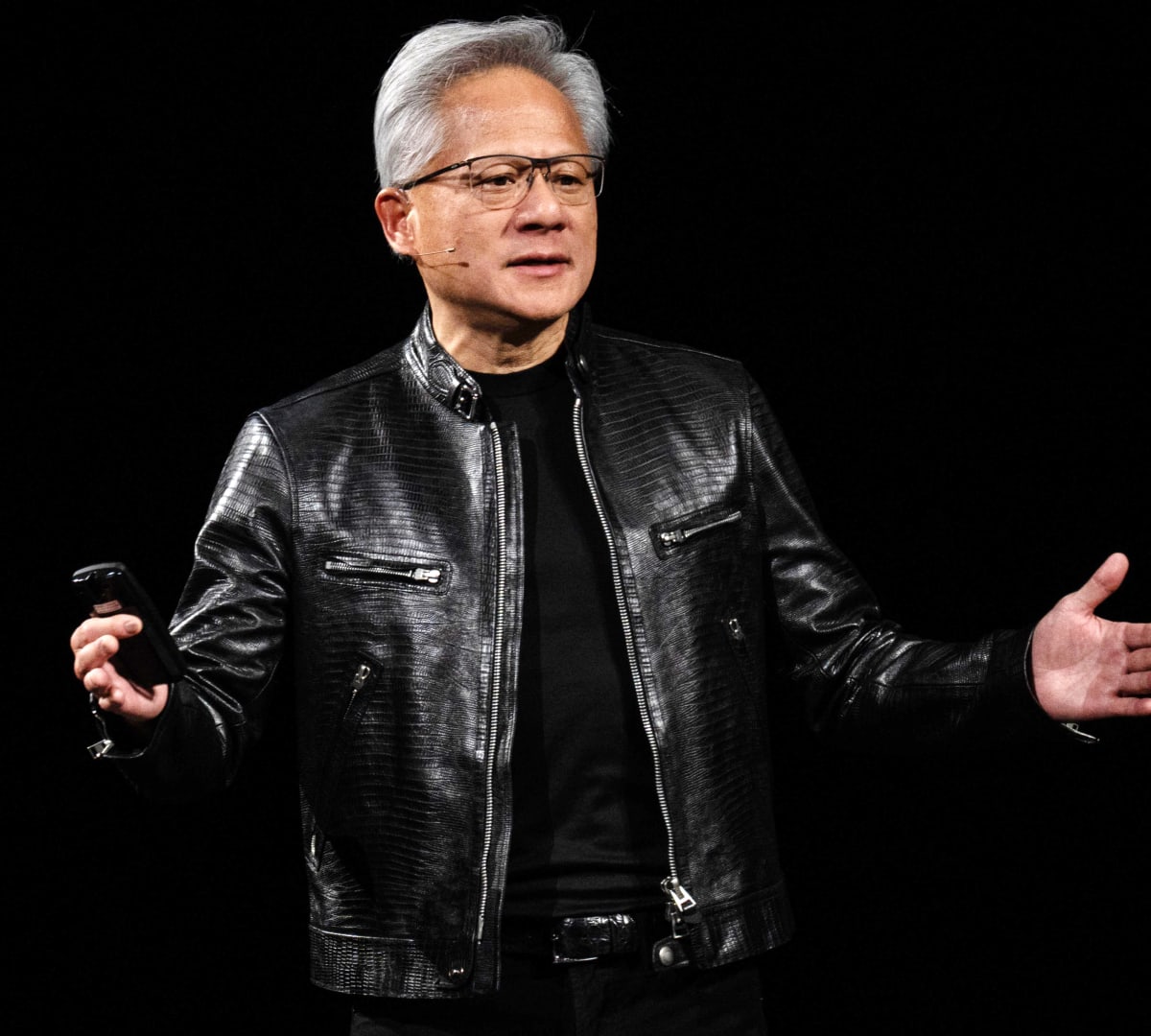
Nvidia shares fell more than 4% on Monday, even as the broader market rallied, after CEO Jensen Huang acknowledged an affair with a purported Chinese spy. Huang disclosed the affair in a message to staff on Sunday. He also said the board was launching an investigation into whether he was targeted by a foreign intelligence agency.
The board said it has "confidence in Jensen" and "no reason to believe that either national security or Nvidia secrets were compromised." Nvidia says Huang will continue to lead the company during the probe.
The New York Times first reported that the Chinese businesswoman was a spy for China's Ministry of State Security, according to people briefed on intelligence circulated in a memo among the Trump administration in the spring. China has called the allegation a smear. Nvidia did not immediately respond to a request for comment.
Sen. Elizabeth Warren of Massachusetts wrote on X that Democrats poised to take control of both houses of Congress are calling for investigations and new legislation "to stop advanced AI chips from fueling China's military." Leaders from both parties are calling for briefings.
Huang has no clear second-in-command, according to CNBC. Analysts at Melius Research said, "there is no clear successor to Jensen, and we had expected him to stay in this role for at least 10 more years." Timm Schulze-Melander of Rothschild & Co. Redburn wrote that Huang could be forced to step back if the investigation reveals "something materially more serious" than an undisclosed relationship. He wrote that the board "needs to demonstrate independence and protect shareholders without destabilizing a company whose success is unusually dependent on its founder."
Huang owns just over 3% of Nvidia's outstanding shares. Internal records reviewed by CNBC show he had 33 direct reports as of this week, including CFO Colette Kress and Chief Scientist Bill Dally. Melius analysts said Nvidia has a "strong bench" of executive talent. Several analysts said the investigation could lead to governance changes, including a transition contingency plan.