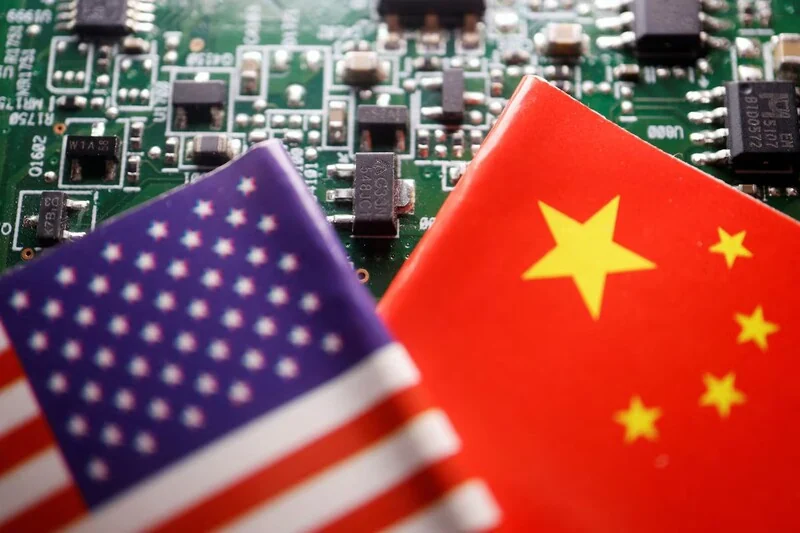
The Trump administration's new rule requiring licences for shipments of advanced AI chips to data centres in Singapore, Thailand, Malaysia, Indonesia and Brazil is a sensible response to a gap that has been widely exploited. According to the report, Chinese AI developers have reached Nvidia processors by renting computing capacity at overseas facilities, sidestepping restrictions on direct chip exports to China. Closing that channel is the right instinct, and the 90-day window for foreign data centres supplying significant computing power to China-headquartered companies gives operators a clear deadline to comply.
The market reaction, however, shows that investors are pricing in more than a policy tweak. Alibaba shares fell 5% and Baidu dropped nearly 7% on Tuesday, while JD.com slipped 2.6% and Tencent more than 3%. Baidu's slide also reflected its own weakness: third-quarter revenue fell 1% year on year, broadly in line with expectations, as softness in advertising offset growth in AI-related services. It would be a mistake to attribute the whole decline to Washington, since the earnings news weighed on one company independently.
Still, the broader lesson is hard to ignore. Chinese technology firms that depend on foreign computing capacity face a supply risk that can change overnight, and that risk now sits alongside a diplomatic calendar. The new controls arrive ahead of President Trump's planned meeting with Chinese President Xi Jinping in Shenzhen on Thursday. Whether the rule is a bargaining chip or a durable policy will shape how companies plan their infrastructure, and the report does not say which it is.
My view is that Washington should be explicit about the rule's purpose and its enforcement mechanics, because vague restrictions invite both evasion and retaliation. Regulators should publish clear criteria for what counts as significant computing power, and they should monitor the data centres in the named countries closely. Investors, meanwhile, should look past the single-day drop and watch Nvidia's quarterly results, which the report notes are awaited for clues on global AI demand. Those results will say more about the durability of this trade than any one headline.