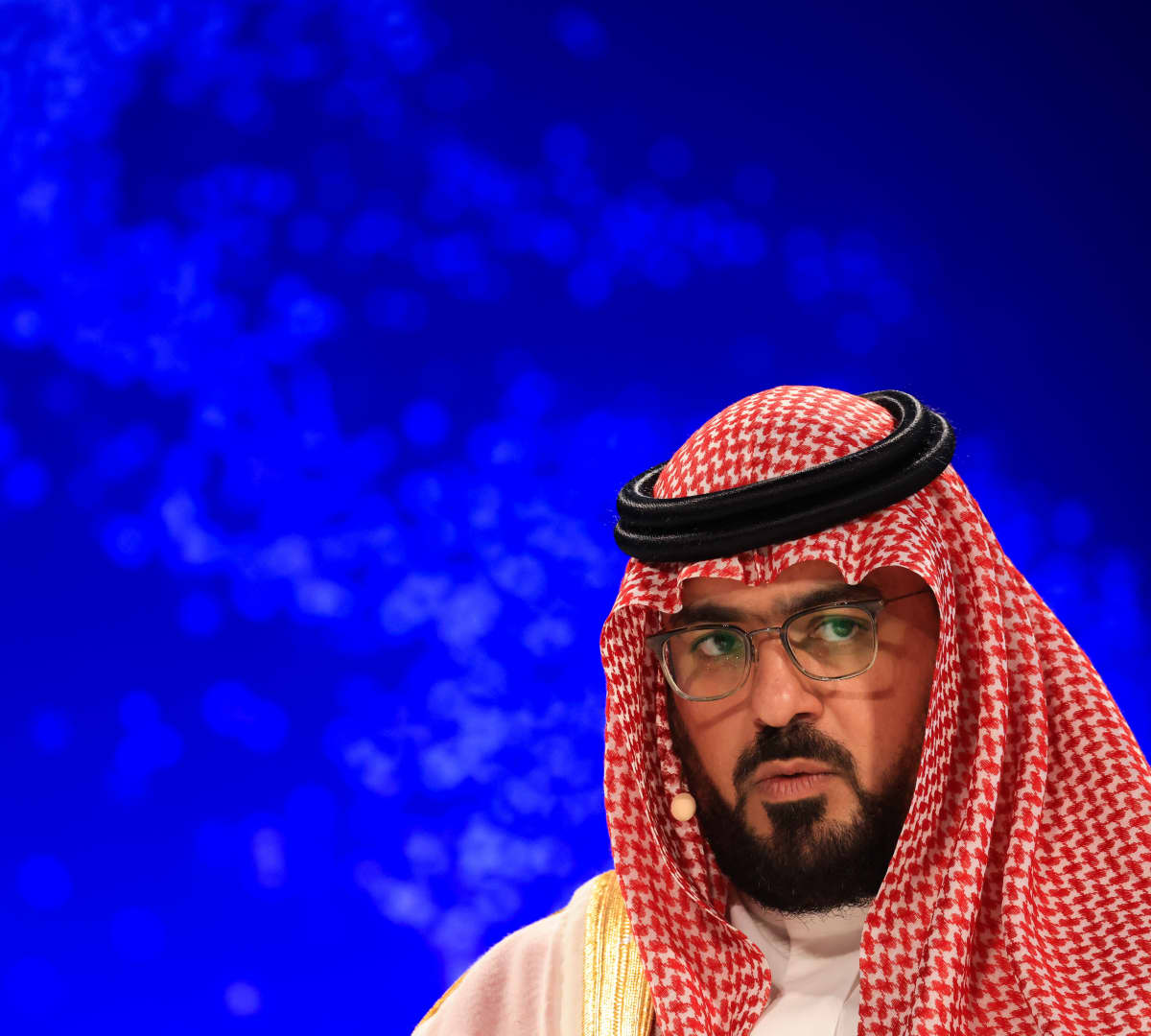
Saudi Arabia has moved its Vision 2030 spending from "spending and delivery at any cost" to "spending and delivering at the right cost," Economy Minister Faisal Alibrahim told CNBC on Friday.
Alibrahim said the government is taking a "policy-first approach" and creating a "clearer business environment" that aligns regulation with international laws. He cited a recently announced 15% minimum effective tax rate on multinational profits, which he said would "create a clearer environment for the private sector to operate."
The Kingdom has scaled back or cut several flagship projects during what the report describes as a sharp economic contraction. The Public Investment Fund has reassessed NEOM and "The Line," withdrawn funding from the LIV Golf tournament, halted construction on a planned Riyadh skyscraper, and postponed hosting the 2029 Asian Winter Games at Trojena.
Real GDP contracted 3.8% in the third quarter, according to government figures. Oil activities fell 20.4% year-on-year, while non-oil activities rose 1.9%. Net foreign direct investment inflows dropped 19.5% year-on-year in the second quarter.
The Saudi Ministry of Finance expects a contraction of around 2.1% this year and a 10.9% rebound next year. Oxford Economics forecasts a steeper decline, with the economy shrinking 3.4% this year and 4% in 2027.
Alibrahim linked the economic strain to ongoing strikes by Iran-backed Houthi militants in Yemen, which the report says have hit targets including the PIF tower, Riyadh Airport and the country's largest oil refinery. Alibrahim said the attacks have also highlighted the importance of diversification.
Neil Quilliam, managing director of Azure Strategy, said investors are assessing whether the attacks show a persistent vulnerability. He said the strikes challenge the "assumption that Saudi Arabia has insulated itself from regional instability."