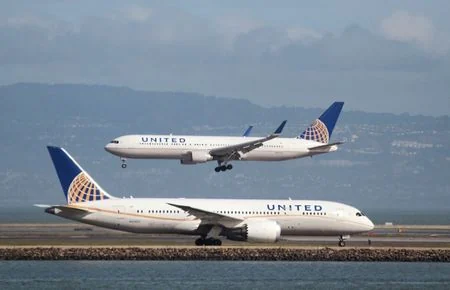
A Copa Airlines Boeing 737 arriving from Panama and a UPS Boeing 767 cargo aircraft collided on the ground at Miami International Airport on Saturday evening. According to Flightradar24, the Copa jet's wing struck the UPS aircraft at approximately 9 p.m. local time. Air traffic control recordings indicated that the UPS plane had traveled beyond its intended position and entered the area where the passenger jet was taxiing. A controller indicated the UPS crew was supposed to yield, and the UPS pilot acknowledged traveling too far before the impact.
The mechanics of this incident are a basic failure of ground coordination: one aircraft was where it should not have been, and another was in its path. Those are precisely the failures that controllers, pilots and dispatch systems are designed to prevent. The report does not say why the UPS aircraft moved past its position, and neither company had responded to requests for comment. Until they do, the cause should be treated as unresolved, not assumed to be a single pilot's error.
The timing makes the episode harder to dismiss as an isolated mishap. The collision happened during a nationwide disruption that followed a flight grounding triggered by technical problems with air traffic control infrastructure. The FAA lifted that grounding after a data overload disrupted communications and radar systems, in what the report describes as the longest nationwide shutdown of its kind in more than two decades. FlightAware reported more than 6,500 flights canceled Saturday and another 8,200 delayed as of 10:40 p.m. New York time.
Transportation Secretary Sean Duffy said he would formally request $50 billion in emergency funding from Congress on Monday to upgrade the country's air traffic control system. That request is the right direction, but it should not be treated as a finish line. Money announced after a crisis tends to arrive in tranches, and the systems that failed on Saturday were already known to be aging. Congress should demand a concrete timeline, measurable reliability targets and public reporting on progress, so that the next outage is not met with the same surprise.
Miami's collision and the nationwide shutdown are two symptoms of the same underlying problem. Airports depend on people and equipment working in tight coordination, and when either layer falters, passengers and cargo pay the price. Investment in modernization is overdue, and the investigations into this crash should be transparent enough to show whether the ground-movement failure reflects individual error, procedural gaps or infrastructure strain.