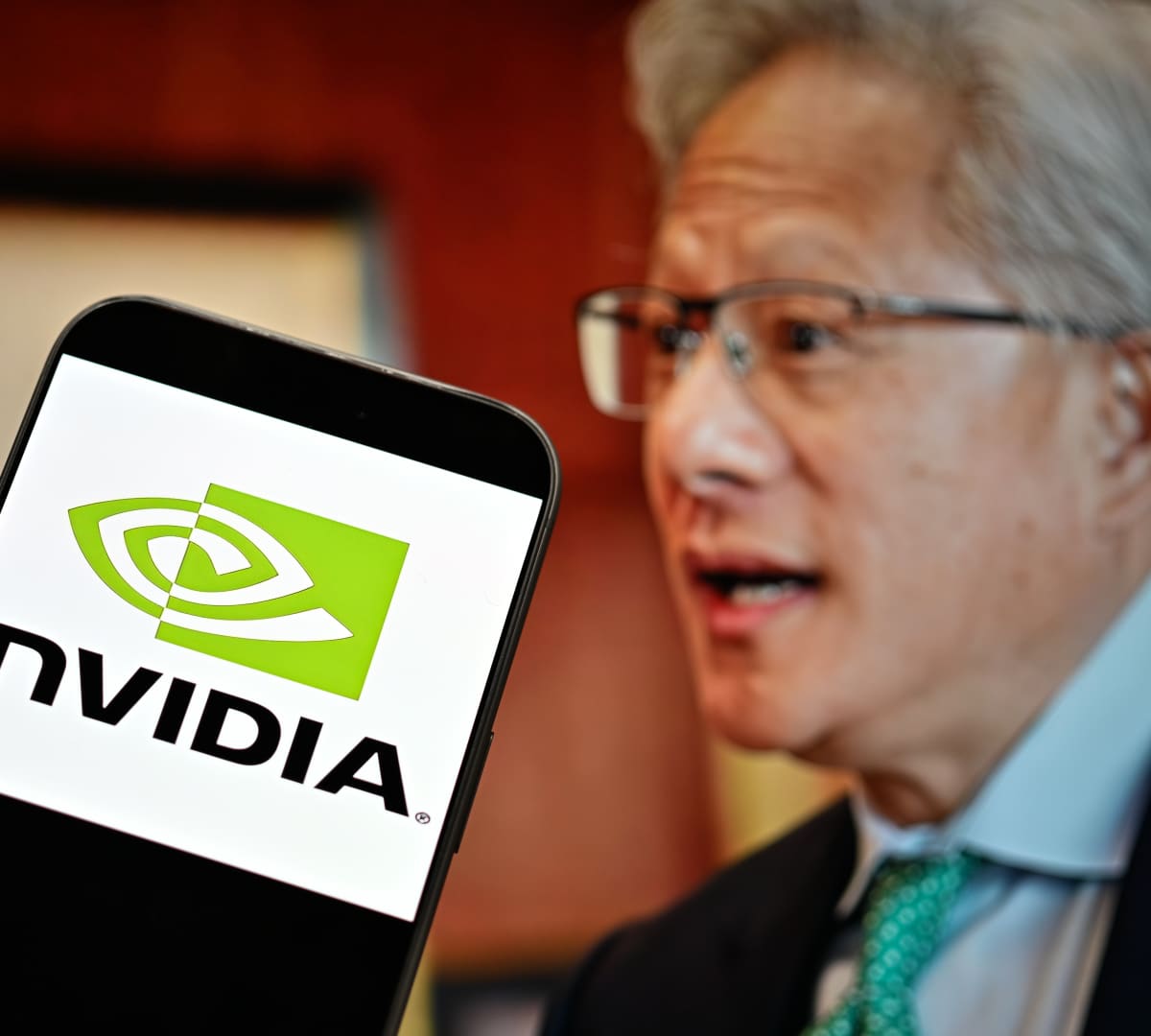
S&P Global Ratings has put Nvidia on CreditWatch with negative implications, warning that its AA rating could fall by one notch to AA- over the next 90 days if management and governance deficiencies persist. The agency framed the issue plainly: news about the CEO and questions about potential export control violations have exposed vulnerabilities in the company's board structure, composition, and effectiveness. That is a credit analyst's way of saying the people supposed to supervise the chief executive have not yet shown they can do it.
The sequence of events makes the concern hard to dismiss. Jensen Huang was ousted and then reinstated within about two weeks, after Chairman Harvey Jones had said directors did not intend to bring him back. The board then voted unanimously to return him, and shares rose as much as 36% in Monday's session. Nvidia shares are now down about 12.5% from Monday's close. Investors who cheered the reversal should notice that the market has already started to reprice the uncertainty.
S&P's most pointed observation concerns board independence. It noted the long tenure of certain directors, with Jones and Tench Coxe serving since 1993 and Brooke Seawell since 1997, and said their independence may be compromised. It also said the agency remained unaware of any remedial action to address what could be meaningful deficiencies. A board that has changed little in three decades, and that has not publicly explained what it fixed after a leadership crisis, is not a reassuring picture for a company with roughly $32.5 billion of bonds in the U.S. high-grade index.
Moody's changed its outlook to stable from positive on Nov. 18, citing governance concerns, and left that view in place after Huang's return. Two agencies now point to the same weakness. S&P also raised questions about geopolitical risk management and internal controls tied to Nvidia's exposure to China, and it quoted Andrew Chang and David Tsui on weak executive oversight and the lack of succession planning, the so-called key man risk.
The practical answer is not complicated. Nvidia's board should use the meeting S&P has requested to lay out concrete steps on independence, oversight of executive conduct, and a credible succession plan, and it should disclose them publicly rather than leave the rating agencies to guess. Long-tenured directors who cannot demonstrate independence from management should step aside. Bondholders, who financed the company with $25 billion of notes in June, deserve no less.