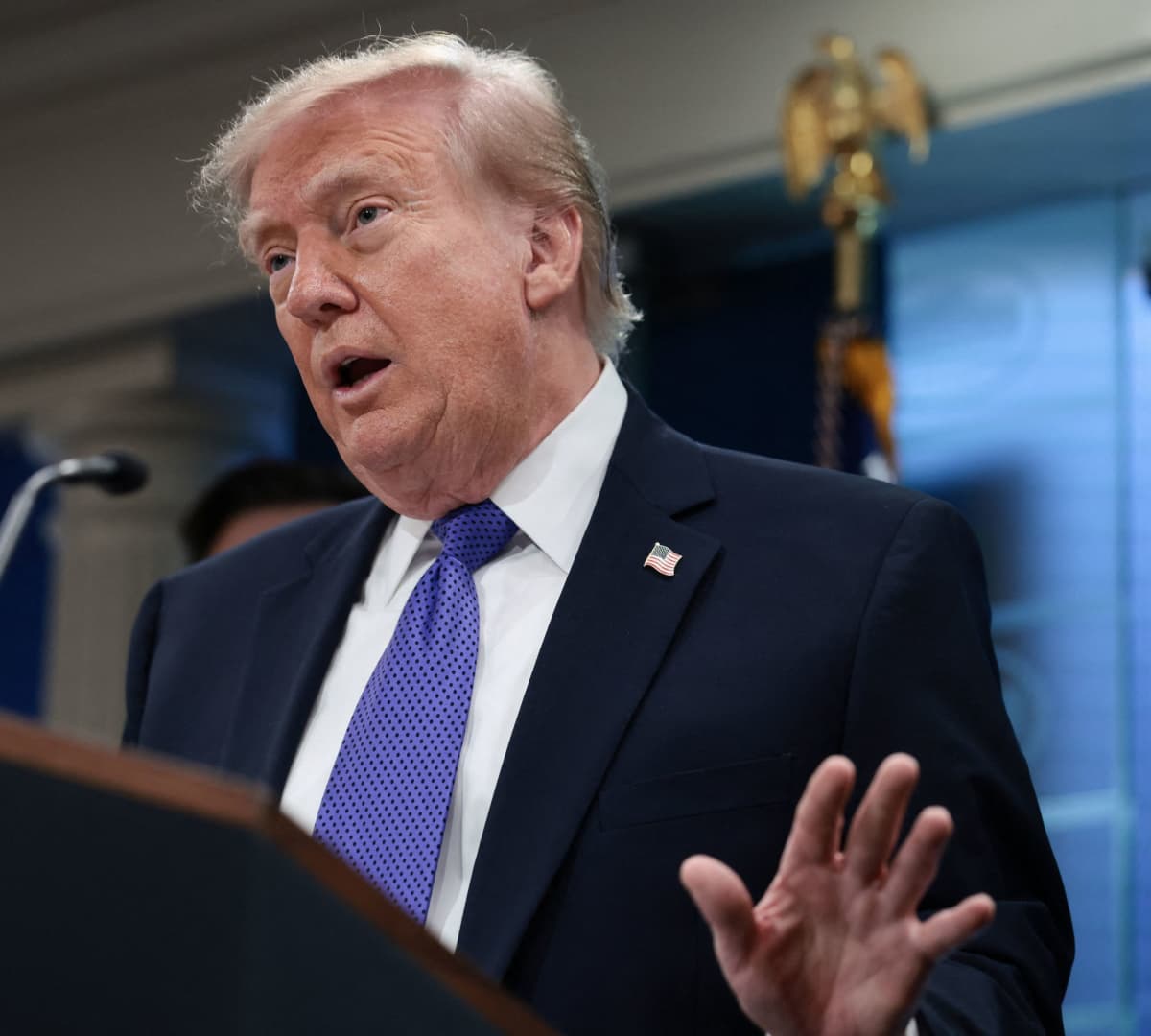
President Donald Trump suggested on Saturday that the latest intrusion into an FBI computer system could have a silver lining. In an interview with Fox News, he said, "Maybe we'll learn about the voter fraud, all the voter fraud that took place," adding, "I always like to put things on a positive spin." The remark treats a serious security failure as a possible political opportunity, and that instinct deserves more scrutiny than it received.
The breached system is not a minor resource. According to two people familiar with the matter who spoke to MS NOW, hackers accessed the National Criminal Information Center, a database that includes FBI fingerprint records, information on wanted persons, violent felons and missing persons. The database is restricted to law enforcement use but is not classified, and it is unclear what data was extracted. CNN first reported the suspected hack, citing sources familiar with the issue. Those facts are the core of the story, and they are still incomplete.
The context makes the offhand comment harder to excuse. The report notes that this is the second recent intrusion into the FBI's systems, following a September incident in which a group known as "ShinyHunters" broke into an FBI jobs website. That breach compromised data on current and former FBI employees and shut down part of the agency's operations until the issue was resolved. Two incidents in a few months suggest a pattern of weak protection, not a one-off accident that happens to carry a useful byproduct.
Trump also said, "I wonder who's doing it, because wouldn't it be great to learn about Russia, Russia, Russia?" He added that "it actually put our country in danger," and that "maybe we'll learn things that we wouldn't have learned otherwise." Speculation about who is responsible is understandable, but a president hoping that a hack will confirm a preferred narrative is not an investigation. Attribution requires evidence, and the public should be wary of any official who appears to have decided the answer before the facts are in.
What should happen next is straightforward. The FBI should explain, as fully as security allows, what was accessed and what was taken, and whether the affected records include the fingerprint and wanted-person data that police nationwide rely on. The agency did not immediately respond to a CNBC request for comment, and that silence should be filled. Lawmakers should demand a timeline and a plan to harden the system. A breach of a database used by law enforcement at all levels is a problem that touches every jurisdiction, and it deserves sober answers rather than a search for a bright side.